Ex. 1 (Exercise 2.3: Objectives, P. 34)
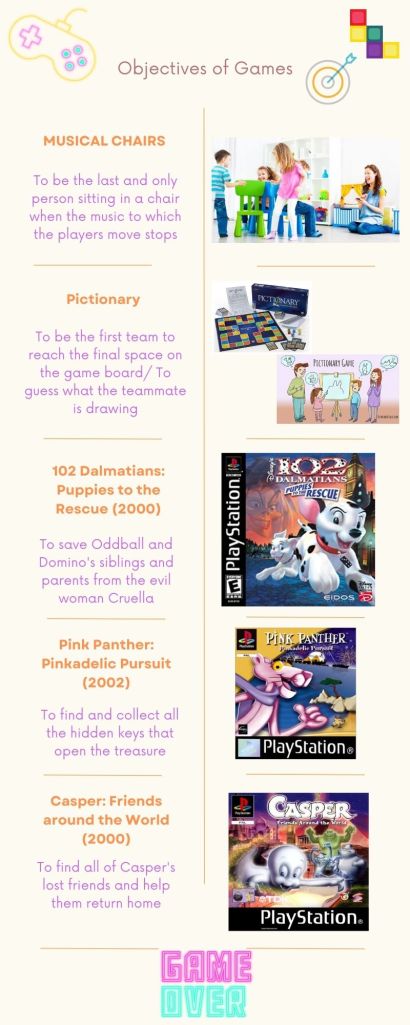
Objectives are fundamental to the game experience. Being highly involved in achieving a game’s objectives is a cardinal and irreplaceable part of the uniqueness and the joy of the play experience.
Ex. 2 (Exercise 2.4: Rules, P. 35)
There are no games without rules because then there would be no way for the game to function. There aren’t any games with a single rule either. I thought so hard, and I even did a search and read about games which people claim have one rule only, but upon taking a closer and deeper look, it turns out there are definitely many more rules than one to those games. This exercise is very difficult because it’s impossible to find a game with a single or no rules. It’s a smart way to prove that rules are essential to games. No rules, no game!
Ex. 3 (Exercise 2.6: Challenge, P. 39)
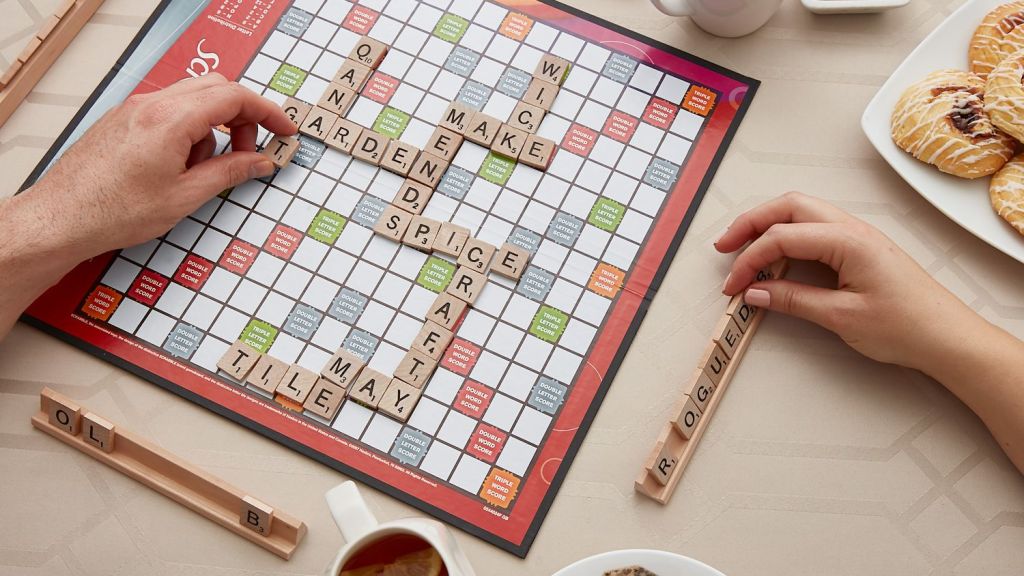
Scrabble is challenging because it allows each player a limited number of tiles with which to form words.
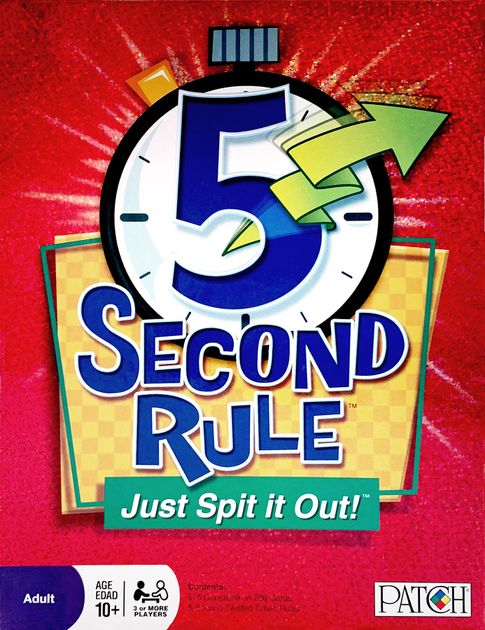
5 Second Rule is challenging because of the extremely limited time it gives the player to come up with the names of the required items.

Heads Up! is challenging because of the very limited time frame within which the player has to describe as many words as possible to their teammate without saying the words themselves.
Rules restrict the actions players can make in a game thus creating conflict and challenge. This, however, increases the fun! Challenge is what players usually look for in a game, for if a game was too easy and straightforward, there wouldn’t be much joy in playing or winning it. The same of course is true for when a game is too hard. Many players will lose interest in the game if it’s impossible to win. A good game is designed to find the sweet spot where challenge is just the right amount.
Ex. 4 (Exercise 2.9: Applying What You Have Learned, P. 49-50)
- There are 2 players in this game who do not necessarily need to have any special knowledge. The need to be able to draw dots and lines & to think logically. Their roles are limited to taking turns drawing dots and lines.
- The objective of the game is to be the last player to move, i.e., the last player to draw a dot or a line and not the player who is out of moves.
- The procedures of this game are as follows:
- Draw three dots randomly on paper.
- Choose a player to go first.
- The first player draws a line from one dot to another dot.
- Then that player draws a new dot anywhere on that line.
- The second player also draws a line and a dot.
- The players take turns until one player cannot make a move.
- The rules of this game are the following:
- The new line that the second player draws must go from one dot to another
- No dot can have more than three lines coming out of it.
- Also, the new line cannot cross any other line.
- The new dot must be placed on the new line.
- A line can go from a dot back to the same dot as long as it does not break rule no. ii.
- The conflict in this game stems from three rules:
- No dot can have three lines coming out of it.
- Every new line must go from one dot to another.
- Every new dot must be drawn on a new line.
- The boundaries of this game are more conceptual than physical. The players are not physically bound by any of the rules except that they need to continue to draw dots and lines until they are out of moves. They are bound by the social agreement that they will not leave the game until it is over and one of them wins.
- The potential outcomes of this game are measurable and unequal: there will be a winner and a loser.
- The challenge in this game is to keep drawing new dots and lines. That is, it is to keep making moves despite the limitations created by the rules.
- This game offers a very limited sense of play. There is not much freedom within its very rigid system. It does not offer the players opportunities to use their imagination, social skills, fantasy, or any types of interaction.
- Premise, character, and story are not present in this game.
The dramatic element that can add to the experience of this game could be play. If the game became less rigid, then more free-form play could take place.
This exercise is amazing because it gave me the opportunity to turn the theory I have learned into practice thus enhancing and solidifying my understanding of the formal elements of games.
Ex. 5 (Exercise 3.11: Boundaries, P. 91)
The physical boundaries of D&D are the tabletop that players gather around to play the game. Its conceptual boundaries are much wider, however. They are fantasy settings that can be anywhere from dungeons to temples, cities, and even whole continents.
The choice of D&D in this exercise is clever as it shows how boundaries can immensely differ in games, and that so many times, games help us use our imaginations to extend the boundaries to wherever we want thus creating infinite opportunities for discovery and meaning making in multiple settings and within various boundaries.

References:
Fullerton, T. (2014) Game Design Workshop: A Playcentric Approach to Creating Innovative Games, NY: Taylor & Francis (CRS Press)/ Chapters 1, 2, & 3 https://doi.org/10.1201/b22309

 Safa'a Abusa'a